As rising London alt rapper Ceebo turns the lens on his own rise with his new mixtape “Bloccstar”, he links up with drill visionary Blanco to unpack ambition, creative freedom and the lessons learned from the rappers who came before them.
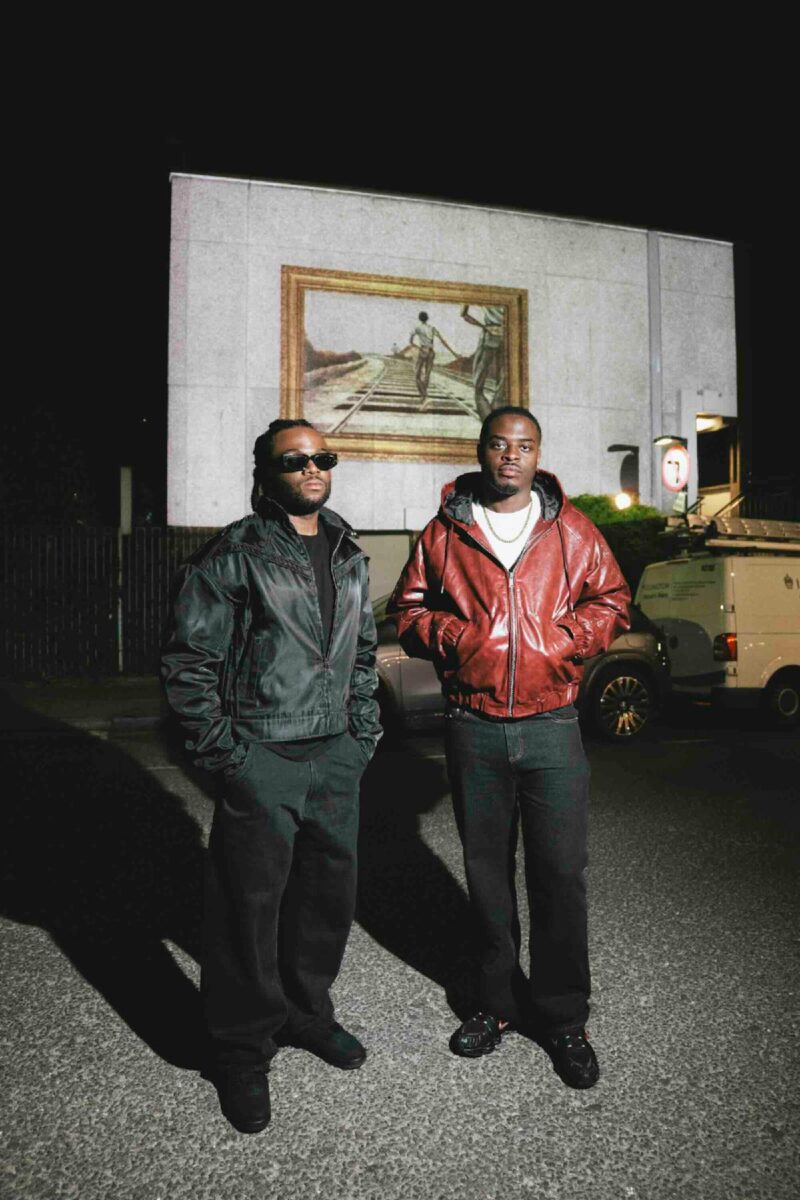
Ceebo’s music has always pulled closely from the world around him through his sharp storytelling. “LAMBETHNOTLA” was rooted firmly in Lambeth, drawing on the people, pressures and everyday realities of the area he grew up in. On “blair babies”, he widened that lens, looking more at what it means to come of age in Britain now, touching on the frustrations, uncertainty and disillusionment felt by his generation in modern Britain.
Now, with music becoming less of a pipe dream and more of a full-time reality, his attention is beginning to shift inwards. Towards his own relationship with success, the industry around him and what it means to stay true to himself as his career grows.
His new mixtape “Bloccstar” looks more closely at what happens when creativity becomes a career. The expectations get bigger, the decisions get more complicated, and staying close to the artist you started out as isn’t always straightforward.
That tension runs through “Gets Like Dat”, his new mixtape-teasing collaboration with fellow London spitter Blanco. Ceebo grew up listening to Blanco and his notorious drill collective, Harlem Spartans, before watching the rapper branch out beyond the sound he first became known for. It makes Blanco a fitting voice on a track concerned with the pressures that come as an artist grows.
Speaking to Wonderland, the pair unpack the recent single, learning from the generations before them, and how their relationship with music has changed as the stakes have risen.
Listen to “Gets Like Dat”…
Read the interview…
Ceebo, you’ve spoken about growing up listening to Blanco. What did his music represent to you then, and what made him feel like the right person to feature on “Gets LIke Dat”?
C: When I was younger, I was listening to [Blanco] and the rest of the Harlem Spartans at the peak of drill. For me, that was peak teenage rebellion and teenage angst. They were from an area just up the road from me, so there was that localised feeling. Obviously, we weren’t exactly living the same lives, but they looked like us, talked like us and made music that felt like what we were going through.
Then, as I got older, Blanco started branching out. That was around the time I started becoming really interested in making music myself, so seeing what he was doing from a musicianship perspective went on to influence my work. He’s meant different things to me at different times.
Blanco, when Ceebo brought you the track, what stood out to you about the way he was approaching the subject?
B: He sent it to me and explained what the track was about. He said he felt like I could relate heavily because we’ve had similar experiences in the music space. When I heard it, I thought, “Yeah, I can definitely relate to this.”
He’s talking about being a lyricist, and that thing of, why can’t you just be a lyricist? Music has probably been like this since the beginning of hip hop. You can be a lyricist, but it doesn’t hit the same commercially when you’re not making those pop records. Labels don’t show as much interest. I’ve lived those experiences in the music industry. I’ve felt like I had to make this or had to make that. I’m a lyricist as well, so it was definitely something I wanted to jump on.
Is it hard finding that balance between making what you want and thinking about what might be successful?
B: At the end of the day, you don’t really have to find a balance. You can just do what you want to do. Sometimes I struggle with it a little bit. In the back of my head, there can be that thought about making a hit song. But it’s really about doing what you want to do. If I genuinely want to make a certain type of song, then I should go for it.
Ceebo, your earlier work often felt like you were documenting the world around you, whereas “Blocstar” feels more focused on what success could actually do to you. Was that shift deliberate?
C: Yeah, definitely. My music is always going to reflect what I’m going through at the time, because that’s what’s easiest to talk about. Right now, I’m going through this transitional phase where music is no longer a pipe dream; it’s a career. I’m blessed to say I do it full-time, but with that come a lot of changes in perception and obligation, perceived or otherwise.
Before, music to me was just coming home from school and writing in my notebooks. I didn’t have to worry about anything else. I was just making what I wanted to make. It was an expression. Now I’m putting it into the world. I’m in business with corporations; I’m in an industry with other people, and people know who I am, or think they know who I am. Things get a bit weird.
To a degree, all of our music is character-based. We choose what we say and what we don’t say, and the audience makes assumptions based on that. It creates complications on a personal level. That’s what I wanted to explore with this project, and it meant shifting gears in how I approached the music and the lyricism. It feels much more like I’m talking directly to people.
On “Parable Of A Skinnyman”, you look at an artist who had a huge cultural impact but didn’t necessarily get the rewards that should have come with it. What was it about Skinnyman’s story that felt important to bring into “Blocstar”?
C: If I’m not learning from those who came before me, then I may as well not do this. The great thing about being young is that I can look at those who came before me and see what worked for them, what didn’t work for them and what they had to go through. A lot of the things I talk about on “Bloccstar” have been happening since the beginning of Black music. In the commercial sense, anyway.
I have that self-awareness because I care to look at the people who came before me. If I were going through all of this with my eyes closed, it would be a lot harder to have the perspective I have now. A lot of my choices are informed by choices that were already made before me, good and bad.
Blanco, did you go through a similar process of looking at the artists before you when you were finding your way through the industry?
B: From a music sense, yes. But from the label side and actually putting music out, I feel like we had to learn a lot of that ourselves. When we started, there wasn’t really anyone to look up to in terms of what we were doing. Obviously, you had grime, and you could learn a lot from that, but it was a new scene.
Labels didn’t really want to touch us because it was like, “Where is this music going to go?” So we did most of it ourselves. In that way, I learned independently. I went through all the stages and made a lot of errors.
Your music has moved through quite a few different sounds over the years. What’s driven that evolution for you?
B: I’ve always been an experimental guy. I grew up listening to a lot of different music, so I was always open to experimentation. There were records I was sitting on for quite a while because I was signed at the time, and they didn’t want to go in that direction. It’s crazy, because those are some of the records that have done the most.
Listen to “Bloccstar”…
Ceebo will tour in January; tickets here.
Words – Joe Hale


