Turnstile are the Baltimore quintet bringing the once niche hardcore scene into the mainstream orbit. At Alexandra Palace earlier this month, they cemented themselves as saviours and innovators alike.
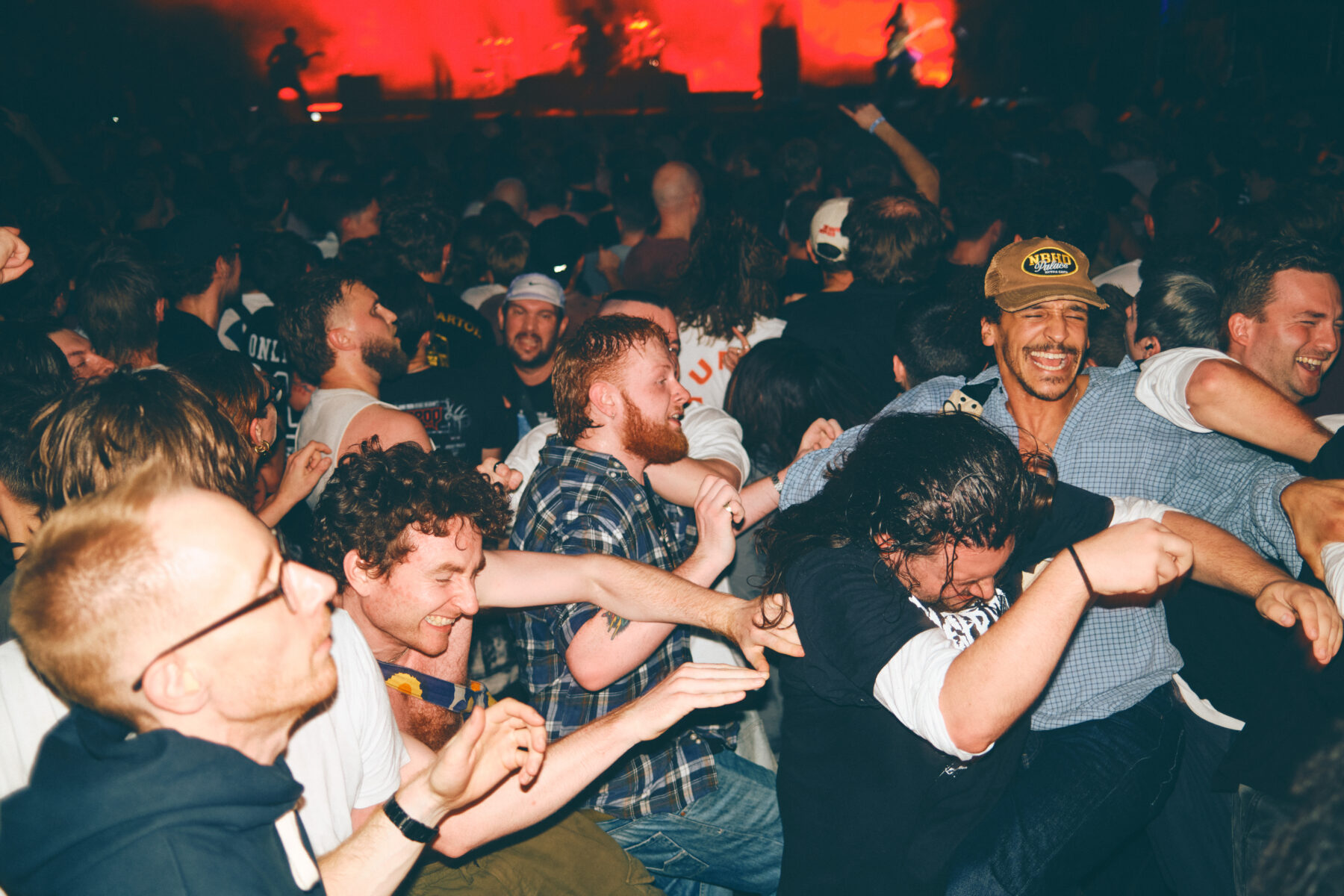
On a freezing November night, after that familiar ascent to Alexandra Palace, Turnstile step onstage to a roar that cuts straight through the cold. They’re Baltimore-born, but the 10,000 people packed inside greet them with a warmth that feels closer to a homecoming show than a tour pit stop. Over the past decade, Turnstile have built their UK following venue-by-venue, pit-by-pit, grin-by-grin — and as the synth shimmer of “NEVER ENOUGH” washes over Ally Pally, it’s clear this isn’t a one-off. It’s the result of years of grassroots growth, word-of-mouth devotion, and a scene steadily expanding to meet them.
For a band rooted in the sweaty basements and DIY ethics of hardcore, their rise to mainstream adoration could have felt like a break from the genre’s rough-edged lineage. Instead, Turnstile have become the band proving that hardcore can evolve without losing itself. Their latest album, NEVER ENOUGH, didn’t just expand their audience; it crystallised a shift that’s been burgeoning for years. The music is still recognisably theirs — urgent, percussive, rhythm-forward — but bathed in colour, softness and an openness that feels wholeheartedly welcoming.
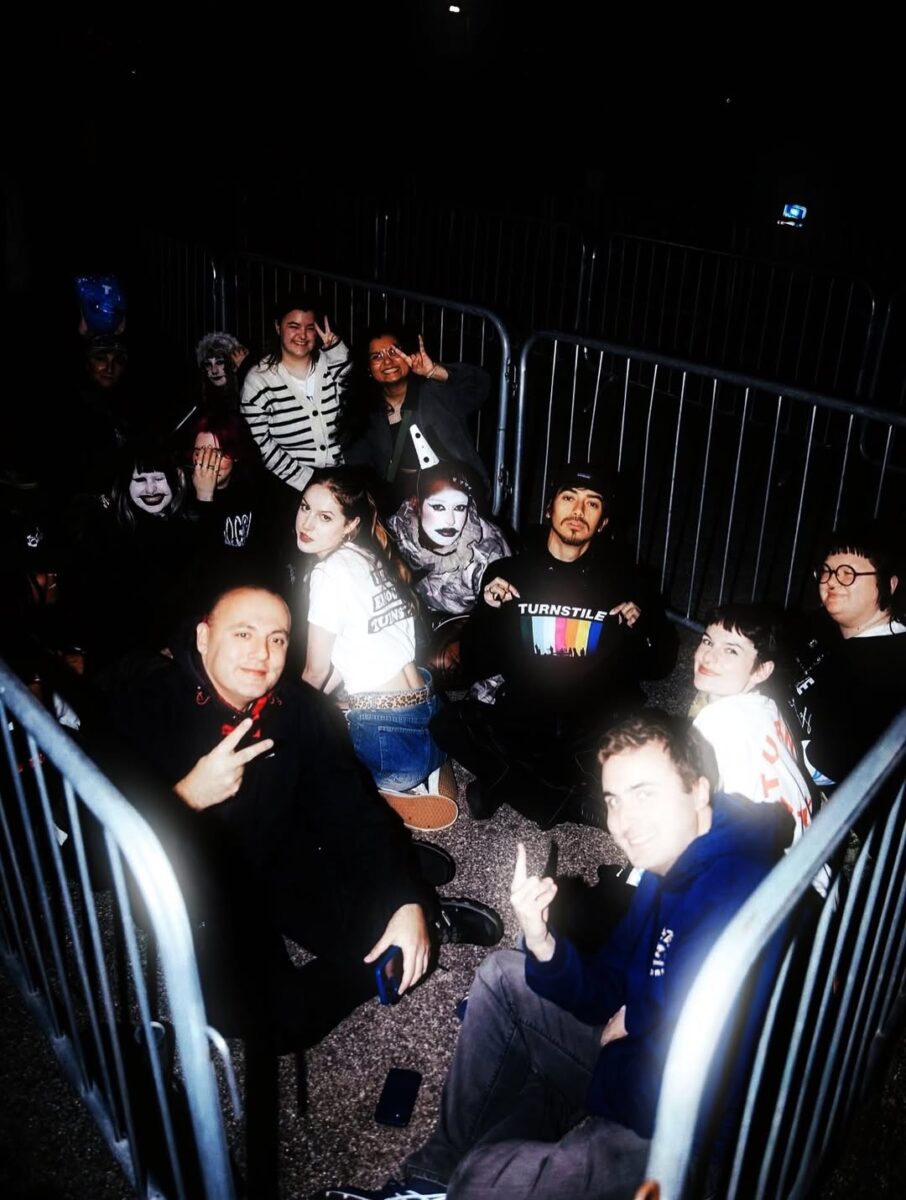
That blend, so vital to their rise, comes up again and again in interviews with fans after their sell-out show in the capital. Matylda, who has been going to gigs like this for years, is here with her motley crew of friends brought together by a shared love of Turnstile’s music, dressed for the occasion in Turnstile merch and leather-clad jackets. “Turnstile are giving the youth (and older generations!) hope that the hardcore/rock scene is still alive and always will be. All their shows and songs have somewhat different but also similar vibes. Turnstile have really shown us what a great community the music scene can, and always will be,” she says.
Her friend Mona, face painted white and dressed theatrically for the show, beams as she adds: “The acoustics and sonics of their songs are one thing — the energy is another. Everyone here is on the same wavelength. You won’t understand until you’ve been to a Turnstile show.”

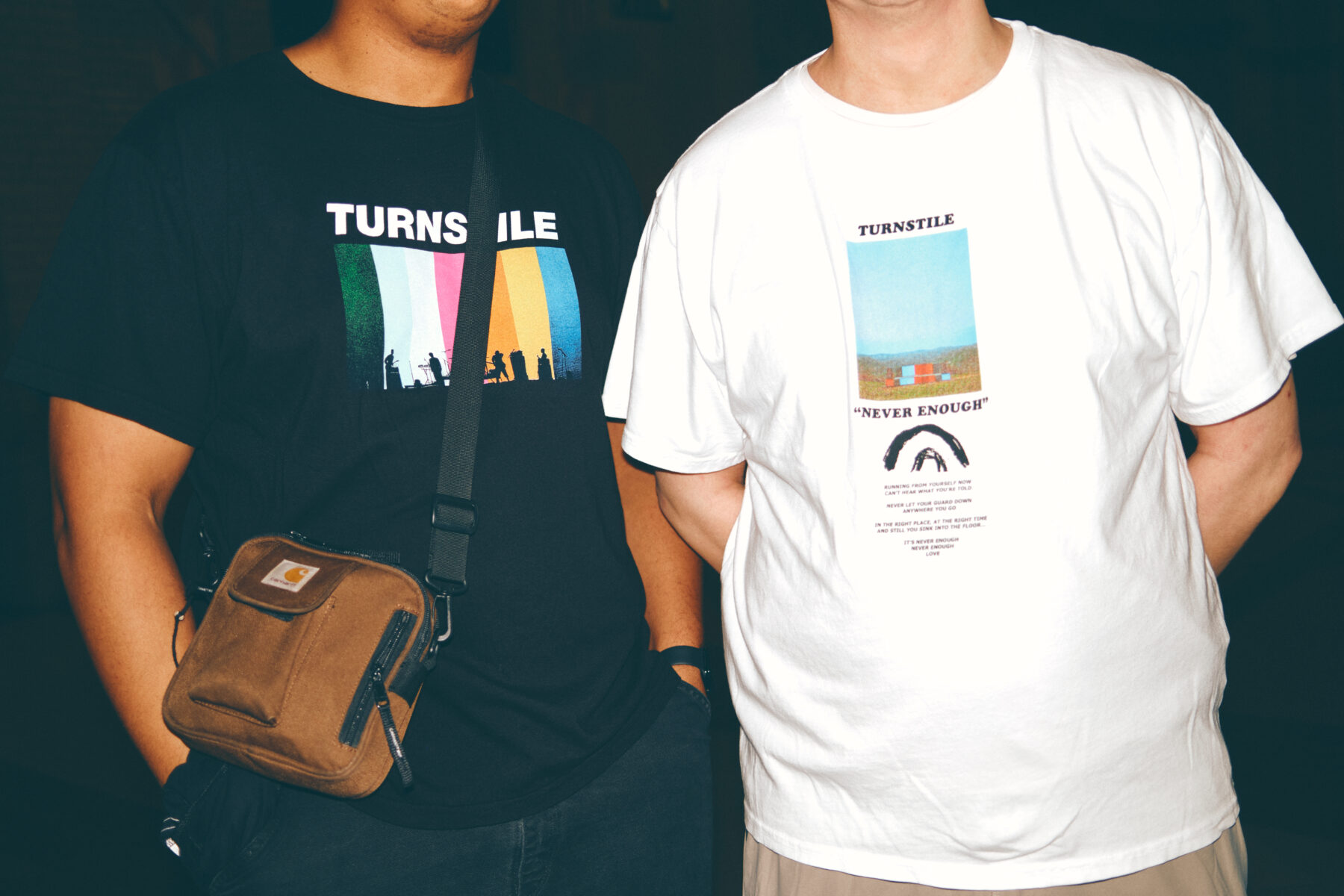
The night opened with the album’s lead single and title track, “Never Enough”, immediately setting the tone with a blend of their trademark hardcore sound, melded perfectly with synth layers. The crowd surged in response, feeding off the energy as frontman Brendan Yates paused to acknowledge fans who had supported them since their earliest London pub shows. Fans reflected on the band’s accessibility in interviews after the gig, with one saying, “The entry point to hardcore has been made much smoother by bands like Turnstile pushing the boundaries on how much softness and vulnerability you can bring into it, whilst retaining its core values. It makes it easier for people who would have previously been really intimidated. Turnstile are a lot easier for people to get into.”
The set moved fluidly through key tracks like “BIRDS” and “Keep It Moving”, which retained its high-energy punch even years after its release. The newer cuts were marked by bright, fluorescent lighting — rainbow hues that have become a visual signature for the band — complementing the sonic intensity of the night. Fans emphasised the inclusive vibe, describing“a good mix of hardcore and pop, with an incredible crowd in. I don’t think there was a single person here who wasn’t here to enjoy the night and be respectful.”
The most poignant thing frontman Yates says all night is simple: “Thank you for letting me be myself.” It’s symbolic of a recurring theme of the evening: accessibility without compromise. For many, Turnstile feel like the first band to crack a long-unsolved problem in the scene — how to evolve without alienating the faithful.
For a Spanish couple living in Dalston, this first Turnstile show was years in the making. Missing the summer gig while away had stung, so when friends pulled out and offered them tickets for the sold-out Alexandra Palace, they jumped at the chance. Seeing the band live, they reflected on the inevitability of their once best-kept secret now commanding global appeal.
“The aesthetic threshold of entry to hardcore has been made much smoother with Turnstile pushing the boundaries of how much softness you can bring into hardcore while still retaining its core values,” they say. “It makes it a lot easier for people who might be intimidated by the stylistic or aesthetic characteristics of other hardcore bands. Turnstile are a lot easier for people to get into, while making sure they don’t lose what makes them hardcore. We’ve regularly followed them over the years. The show was easy on the eyes, and people do listen with their ears, but see with their eyes. How they look also sees people in.” Their words capture what Turnstile have managed to do: make hardcore feel expansive, welcoming, and alive, without ever losing its edge.
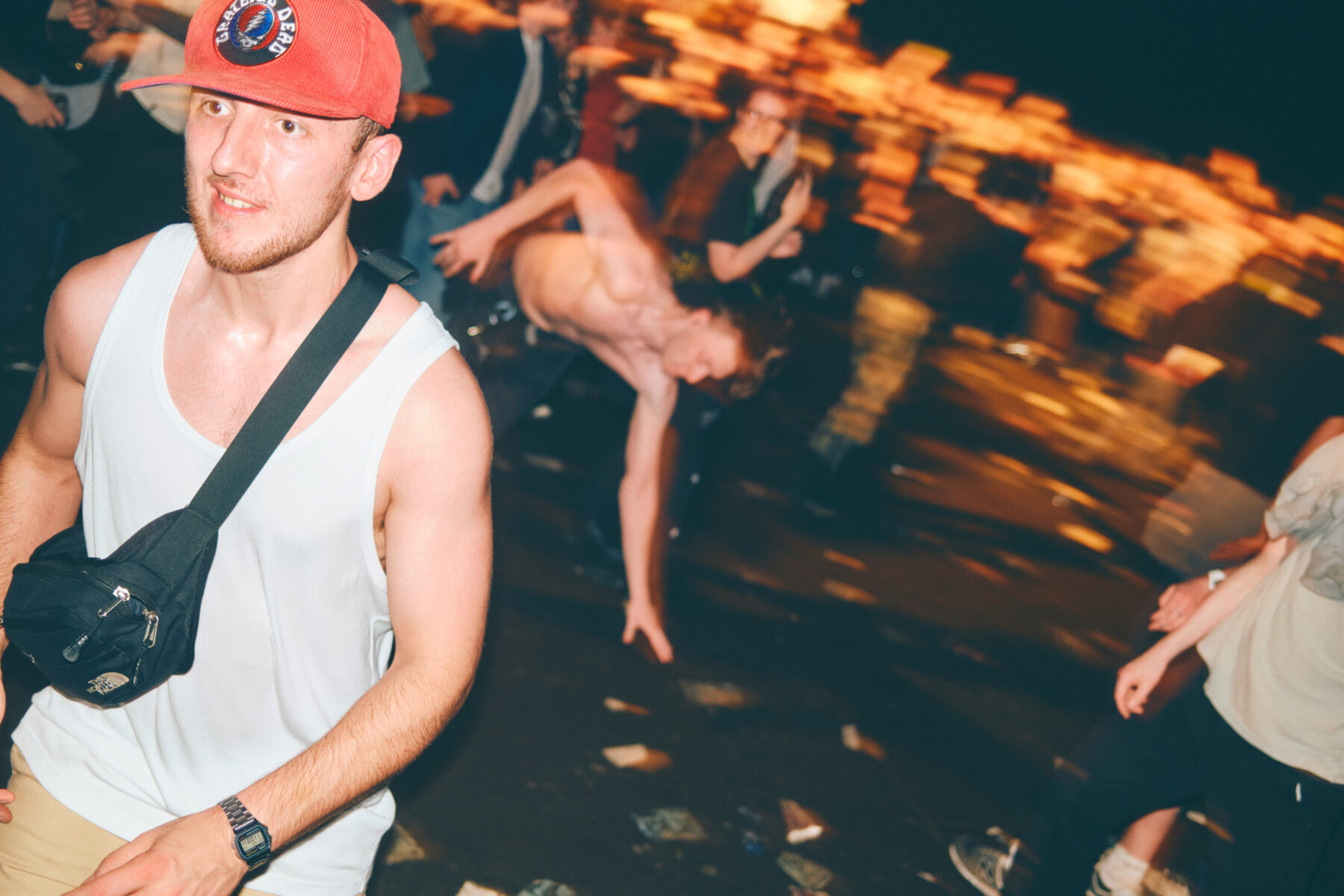

“People are letting it out with smiles on their faces,” says Bob Whitehead, a freelance photographer who spent his night firmly in the pit to shoot the crowd. He describes the atmosphere of the night as “Energy released not as hate, but love. Maybe that’s where the Turnstile Love Connection comes from. It’s anger and frustration, transformed in a loving way.”
Whitehead’s words hint at something essential. Hardcore has long been a home for catharsis, but its emotional palette has often skewed darker, harsher. Turnstile offer an alternative: a space where catharsis and joy are not opposites but extensions of the same impulse. It’s why they can pivot from the pounding ferocity of “HOLIDAY” to the disco-ball shimmer of “SEEIN’ STARS” without interrupting the emotional logic of the night. Fans aren’t jarred by the contrasts; they’re energised by them.
“They’ve managed to keep their core fanbase incredibly happy,” says Kian, who travelled from Leeds with two university friends he met at hardcore gigs. “And at the same time, they’ve brought so many new people in. They still play the old songs — the ones that made us fall in love with them years ago — even as they get bigger and more expansive.”
This balance — reverence for the past, confidence in the future — is central to their appeal. Turnstile’s earliest London shows were cramped, communal affairs. House of Vans, October 2018: 850 people packed shoulder-to-shoulder, the kind of night where sweat drips from the ceiling and half the crowd ends up on stage by accident. Fast-forward to Alexandra Palace: a venue more than ten times the size, yet the energy feels nearly identical. It’s chaos, but organised; ecstatic, not reckless. And crucially, it still feels like hardcore.



“Hardcore can sometimes be a very white, very male space,” Whitehead adds. “Turnstile feel different. Diverse, open, genuinely communal. They’ve been in the trenches a long time, and the evolution of their sound mirrors that journey. With GLOW ON, and now NEVER ENOUGH, they’ve made that leap. It feels organic, like they’d be making this music regardless of ticket sales.”
That sentiment is echoed by fans across generations. Chris and his partner Jade, who travelled from Wiltshire, describe the band’s appeal as “a beautiful conglomeration of people who enjoy good music.” Jade adds: “It’s light-hearted fun. You feel inclusive here. It sounds corny, but this is community.”
It’s a sentiment that could sound like hyperbole were it not so widely echoed. Jakey and Helena, visiting from Birmingham to see both Turnstile and High-Vis, capture it succinctly: “They’ve gone from being a lesser-known band in a lesser-known genre to being mainstream. But everyone still looks out for each other. That’s the main thing.”
The night at Ally Pally makes that obvious. Even during the most chaotic pits, arms shoot out to catch anyone who falls. Security guards relax into smiles. The cameras on stage linger not on the band but on the crowd — kids hugging, friends weeping with joy, strangers offering water to each other. Hardcore, but gentle. Heavy, but affectionate. A release, but one rooted in connection rather than alienation.
By the encore, with the lights dimming and the final notes ringing into the rafters, the meaning of the night feels bigger than a single gig. It is both a celebration of Turnstile’s long road from Baltimore basements and a statement about what hardcore — and perhaps rock music more broadly — can look like in the hands of a band willing to challenge its own boundaries.
Turnstile haven’t abandoned the genre that shaped them. They’ve expanded it, complicated it, made space within it for softness, colour, melody, vulnerability, euphoria. And in doing so, they’ve cultivated one of the most passionate, diverse and fiercely loyal fanbases in contemporary rock. A fandom that doesn’t simply watch them perform, but completes the circle — singing, sweating, laughing, collapsing into each other, building a world together for ninety ecstatic minutes.
A band once defined by basements now fills arenas without losing the pulse of their origins. Turnstile are not just shaping the future of hardcore; they’re inviting everyone in.
Words – Josh Crowe


